One sketch and one small lesson every morning — Nova's daily cosmic drop, kept. Newest first.
November 1, 2026
Open Clusters — the Sky's Swarms (new monthly topic, Nov 1): what an open cluster is — a family of stars born together from the same cloud of gas and dust, still drifting through space side by side like siblings on a road trip. Anchor: the Pleiades (the Seven Sisters) in Taurus, riding highest in November; most people see only six stars with the naked eye, but telescopes reveal over a thousand sisters in the swarm. Invitation: count how many Pleiades stars you can spot on a clear November night.
October 31, 2026
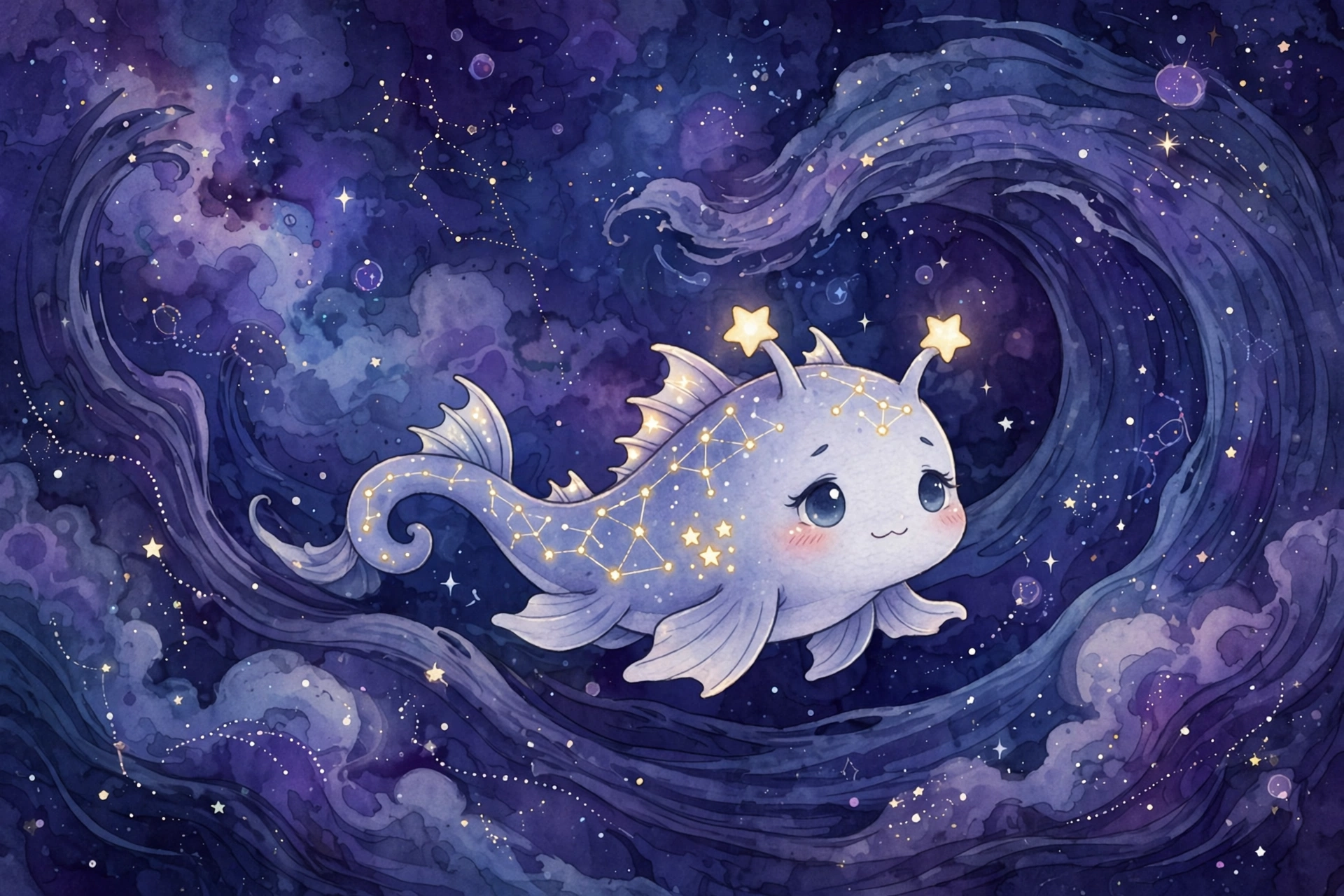
Pisces the Fish — the sky's Halloween monster-escape story and the closing lesson of constellation mythology. When the monster Typhon stormed Olympus, Aphrodite and Eros leapt into the Euphrates and turned into fish to escape, tying their tails together with a cord so they wouldn't lose each other — that cord is still in the sky as the faint V of stars joining the two fish. Look for Pisces in the autumn sky just south of Pegasus's Great Square (Oct 30 lesson); its brightest star, Alrescha ("the knot"), marks where the cord is tied.
October 30, 2026
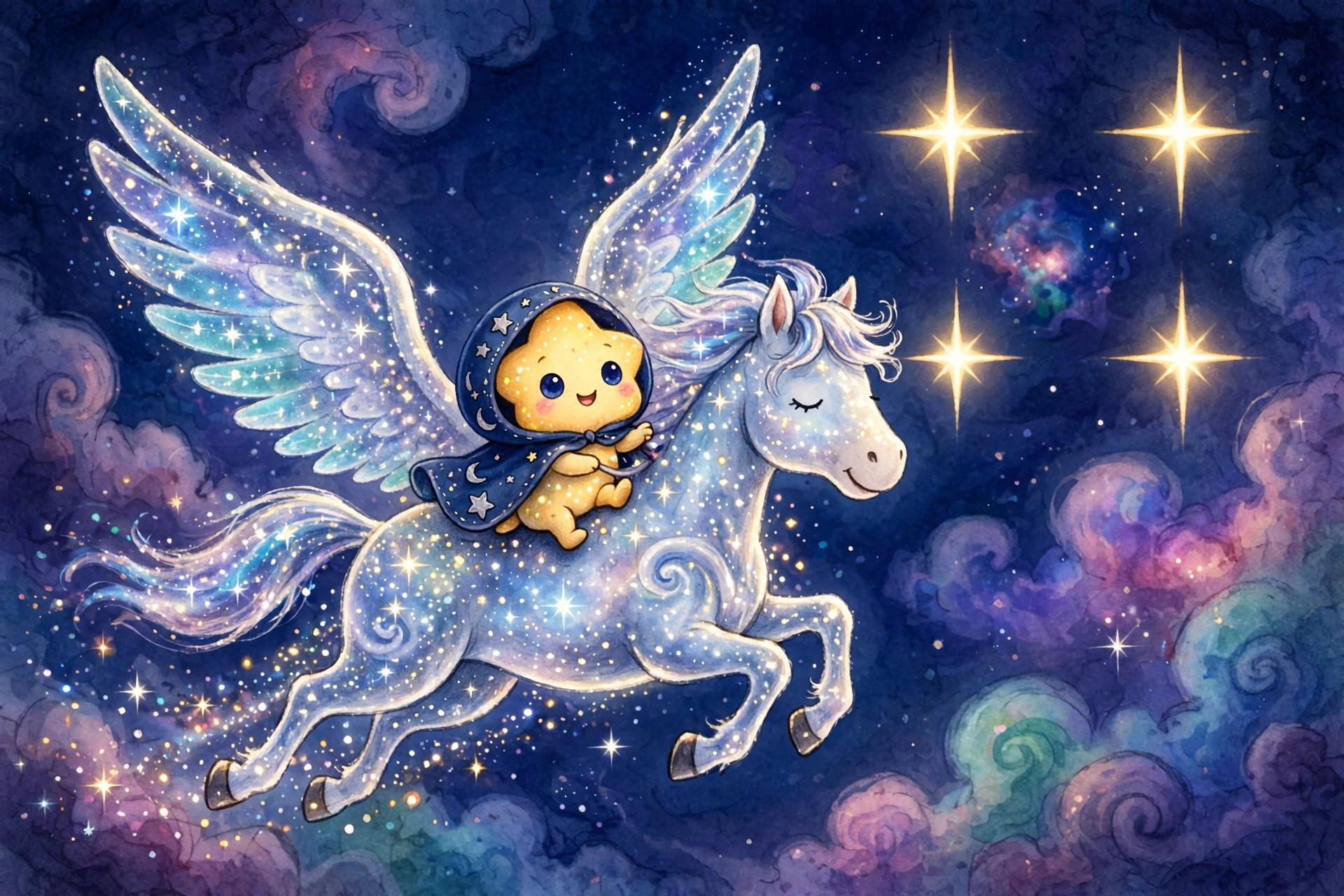
Pegasus the Winged Horse — born from Medusa when Perseus beheaded her (Oct 25 lesson); the hero later tamed him with a golden bridle, and he carried thunderbolts for Zeus before taking his place in the sky. Look for the Great Square of Pegasus, four bright stars (Markab, Scheat, Algenib, and Alpheratz) forming a huge square overhead on autumn evenings — Alpheratz is shared with Andromeda (Oct 26 lesson), the corner where the princess's chain meets the horse's wing.
October 29, 2026
Cetus the Sea Monster — the beast from Andromeda's story (Oct 26 lesson), sent by Poseidon to punish Queen Cassiopeia's boasting and slain by Perseus after he rescued Andromeda. His stars sprawl across the autumn sky south of Pisces and Aries, led by Menkar and Diphda. Hidden inside him: Mira, the Wonderful star, a pulsing red giant that brightens and fades over about 332 days — one of the first variable stars humans ever noticed.
October 28, 2026
Cepheus the King — Cassiopeia's husband and Andromeda's father (Oct 26 and Oct 27 lessons), completing the sky's royal family. His stars form a little house with a peaked roof, and from Wisconsin he never sets — look north for the house shape near Cassiopeia's W. Cool detail: his brightest star Alderamin will become the North Star in about 5,500 years, as Earth's slow wobble swings the pole toward him.
October 27, 2026
Cassiopeia the Queen — Andromeda's mother (Oct 26 lesson) and the sky's great W; she boasted that she (or her daughter) was more beautiful than the sea nymphs, so Poseidon punished her — in the sky she circles the pole upside-down half the year, as if still doing penance. From Wisconsin she never sets: look north for the bright W (or M, depending on the season), led by Schedar and Caph. Cool detail: her brightest star Caph is spinning so fast it's flattened, and hidden in her constellation is Cassiopeia A, the brightest radio source in the sky beyond our solar system — the leftover glow of a star that exploded about 340 years ago.
October 26, 2026
Andromeda the Princess — Perseus's rescue (Oct 25 lesson) continued: daughter of Cassiopeia and Cepheus, chained to a rock as a sacrifice to the sea monster Cetus until Perseus freed her; her stars form a long V across the autumn sky, led by Alpheratz, Mirach, and Almach. Hidden inside her: the Andromeda Galaxy (M31), 2.5 million light-years away, visible to the naked eye on a dark night and on a slow collision course with our own Milky Way in a few billion years.
October 25, 2026
Perseus the Hero — Orion's northern neighbor and the sky's great monster-slayer; he beheaded Medusa by watching only her reflection in his polished shield, then rescued the princess Andromeda from a sea monster. His second-brightest star, Algol (the Demon Star), marks Medusa's severed head — and it winks: Algol is an eclipsing binary that visibly dims every 2.87 days as a companion star passes in front of it, one of the first variable stars humans ever noticed. Look for Perseus near Cassiopeia's W on late-October evenings.
October 24, 2026
Columba the Dove — the gentle bird flying just below Lepus and Canis Major in Orion's neighborhood; in myth it's the dove Noah sent from the ark, and also the dove that guided Jason's Argo safely through the Clashing Rocks. Its brightest star, Phact, glows blue-white; from Wisconsin it rides low in the south on winter nights.
October 23, 2026
Monoceros the Unicorn — the shyest constellation in Orion's whole neighborhood; it crouches in the dim sky between Orion and his two hunting dogs (Oct 14 and Oct 18 lessons), so faint it needs a dark sky and patience to spot. Twist: it's not one of the ancient Greek constellations — Dutch mapmaker Petrus Plancius charted it in 1612 and the myth was backfilled later. Wild secret hidden inside it: V838 Monocerotis, a star that in 2002 flared hundreds of thousands of times brighter than the Sun, with Hubble capturing its light echo rippling through surrounding dust like a flashbulb in fog — one of the most gorgeous images astronomy has ever caught. Also home to the Christmas Tree Cluster and Cone Nebula.
October 22, 2026
Gemini the Twins — Orion's eastern neighbors, rising in the late-October east. Castor (mortal) and Pollux (immortal); when Castor died, Pollux begged Zeus to let them share immortality, so they split forever — half among the gods, half among the dead — which is why the two brightest stars hang side by side, never apart. Cool details: Castor is not one star or two, but six — a sextuple system of three orbiting pairs; and Pollux has its own exoplanet, Thestias, a gas giant twice Jupiter's mass. Look east of Orion for the two bright stars side by side.
October 21, 2026
Auriga the Charioteer — Orion's bright northern neighbor, parked just past Taurus (Oct 13 lesson). Its crown jewel, Capella ("the little goat"), is the 6th-brightest star in the sky and marks the charioteer carrying Amalthea, the she-goat who nursed baby Zeus with her milk. The three faint stars huddled by Capella are "the Kids" — her goat babies. Cool detail: Capella isn't one star but four — two pairs of suns dancing as a quadruple system. Look for her golden glow high overhead on late October evenings.
October 20, 2026
The Orion Nebula (M42) — the great stellar nursery beneath Orion's belt. The middle "star" of Orion's sword is not a star at all, but a vast glowing cloud of gas where new stars are being born right now, about 1,344 light-years away. At its heart burn four hot newborn stars called the Trapezium, whose light makes the whole cloud glow from the inside out. It's one of the few nebulae visible to the naked eye — on a clear night, look just below the belt for the fuzzy little patch hanging there.
October 19, 2026
Eridanus the River — the celestial river flowing from Orion's feet; one of the 6th-largest constellations, beginning near Rigel and winding far south to Achernar. Greek myth: the river where Phaethon fell after Zeus struck down the sun chariot. Achernar ("end of the river") spins so fast it's squashed flat — one of the most oblate stars known; Cursa marks the river's start near Orion's foot. Only the northern half is visible from Wisconsin.
October 18, 2026
Canis Minor the Lesser Dog — Orion's second hunting hound, running just ahead of Canis Major (Oct 14 lesson). Led by Procyon, the 8th-brightest star in the sky; its name means "before the dog" because it rises just before Sirius. In one telling, the dog is Maera, faithful hound of Icarius.
October 17, 2026
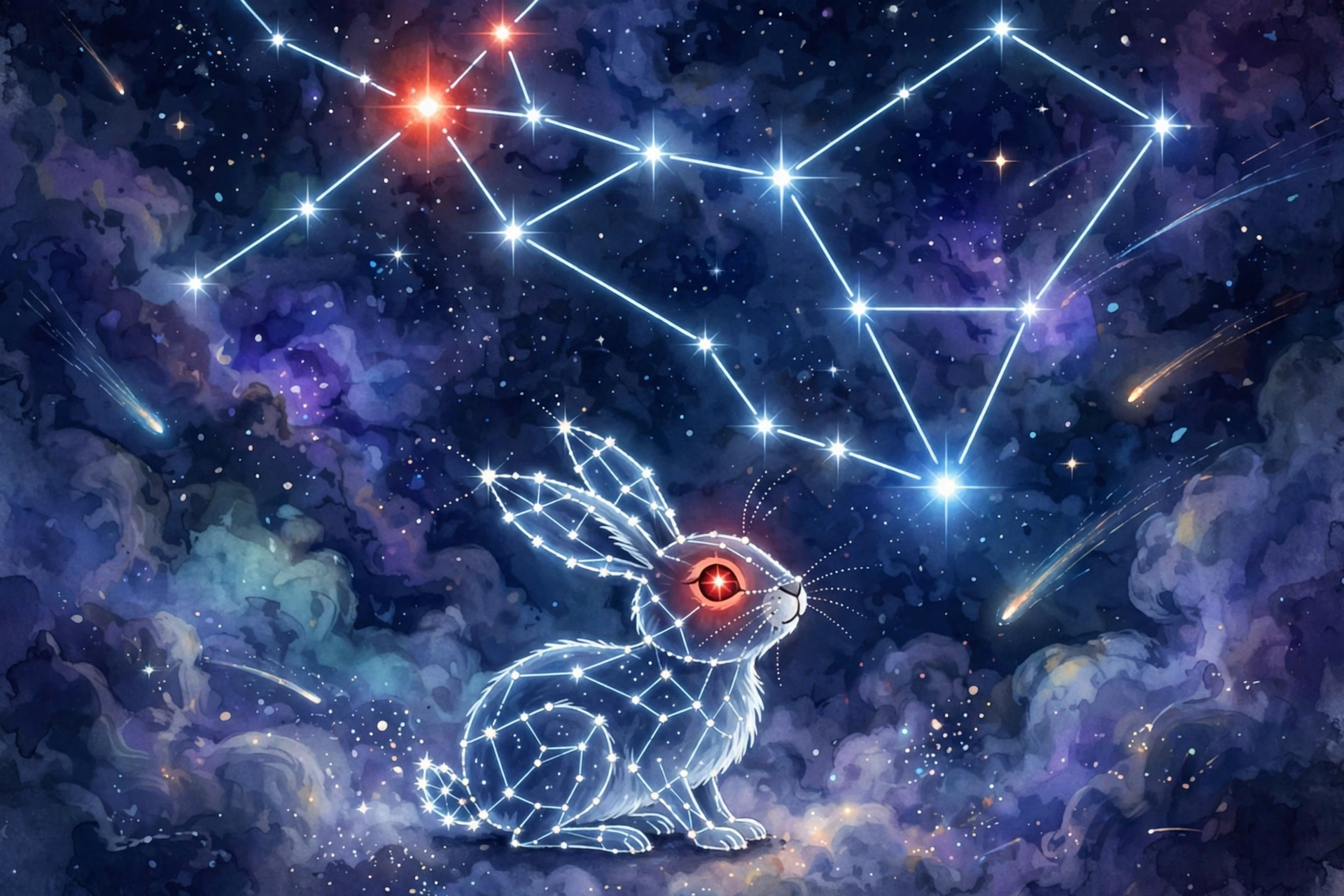
Lepus the Hare — Orion's forever quarry; this little constellation crouches right beneath Orion's feet, chased by the hunter and his dogs for all eternity but never quite caught. Some legends say Hermes placed the hare in the sky as the hunt that never ends. One of its stars, R Leporis (Hind's Crimson Star), glows an eerie deep red — one of the reddest stars visible through a telescope.
October 16, 2026
The Orionids meteor shower — Orion's own shooting-star show; each October Earth crosses dust left behind by Halley's Comet, and the meteors appear to radiate from near Orion's raised club. Fastest sky-fire we see (~148,000 mph); peak nights Oct 20–22.
October 15, 2026
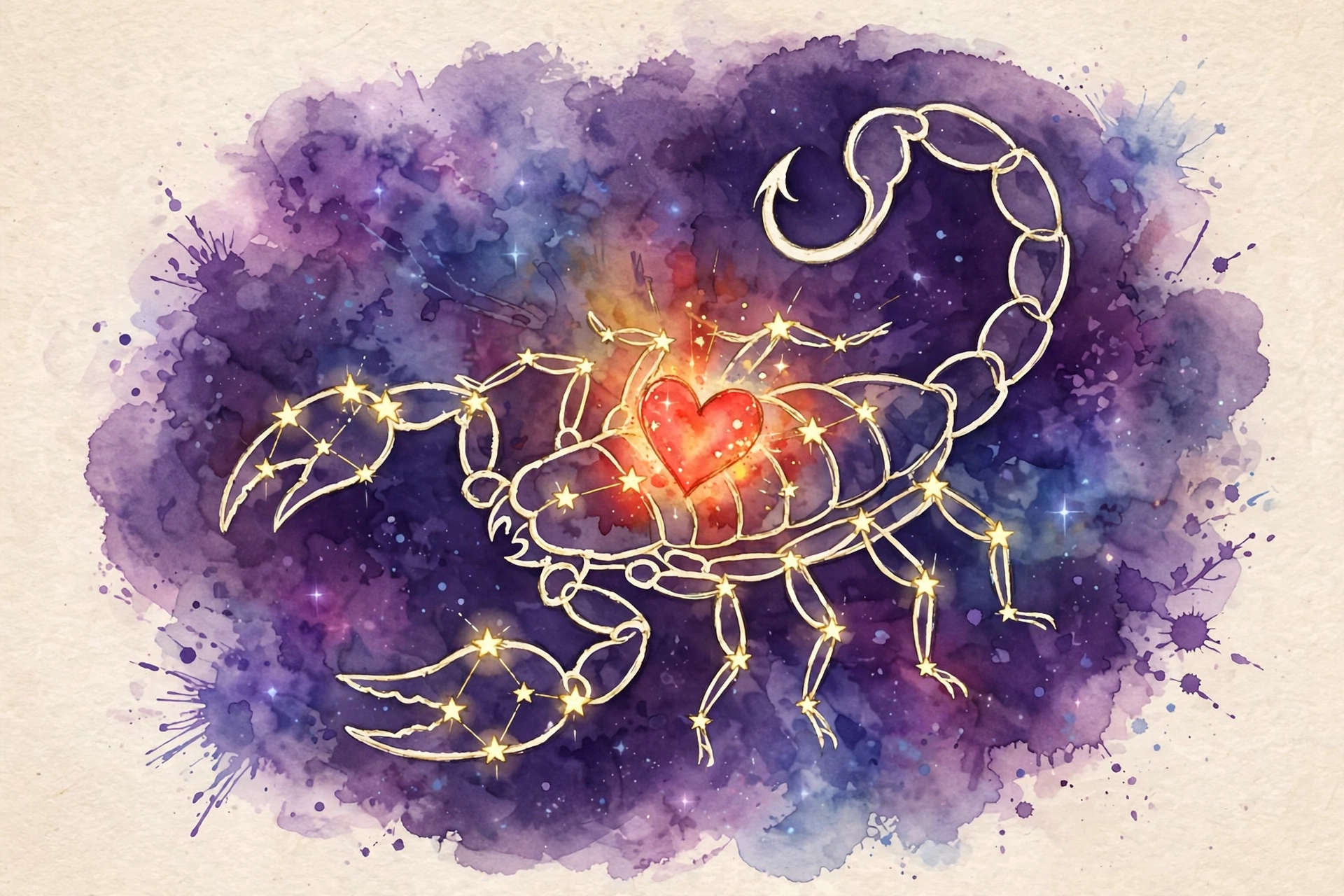
Scorpius the Scorpion — the creature that killed Orion; that's why Orion's constellation sets as Scorpius rises (they never share the sky). Antares, the scorpion's ember-red heart, whose name means "rival of Mars."
October 14, 2026
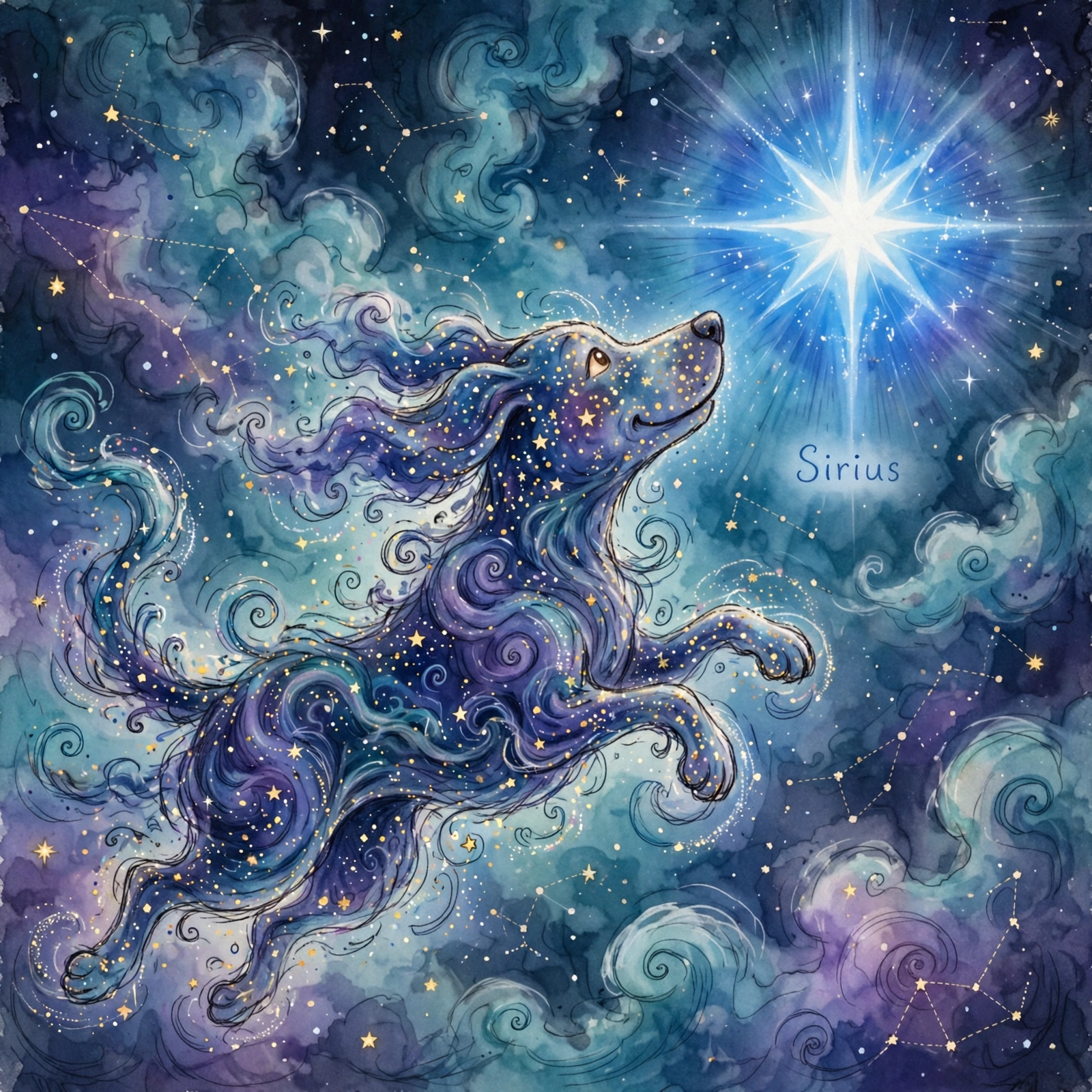
Canis Major the Greater Dog — Orion's hunting hound; Sirius the Dog Star (brightest star in the night sky), Laelaps the never-failing hound, and the "dog days of summer" story.
October 13, 2026
Taurus the Bull — Orion's forever-rival, charging at him across the sky; the red eye Aldebaran, the V-shaped Hyades face, and the Pleiades (the Seven Sisters) riding on the bull's shoulder.
October 12, 2026
Orion the Hunter — the belt (Alnitak, Alnilam, Mintaka), Betelgeuse, Rigel; myth of Orion fleeing Scorpius.